

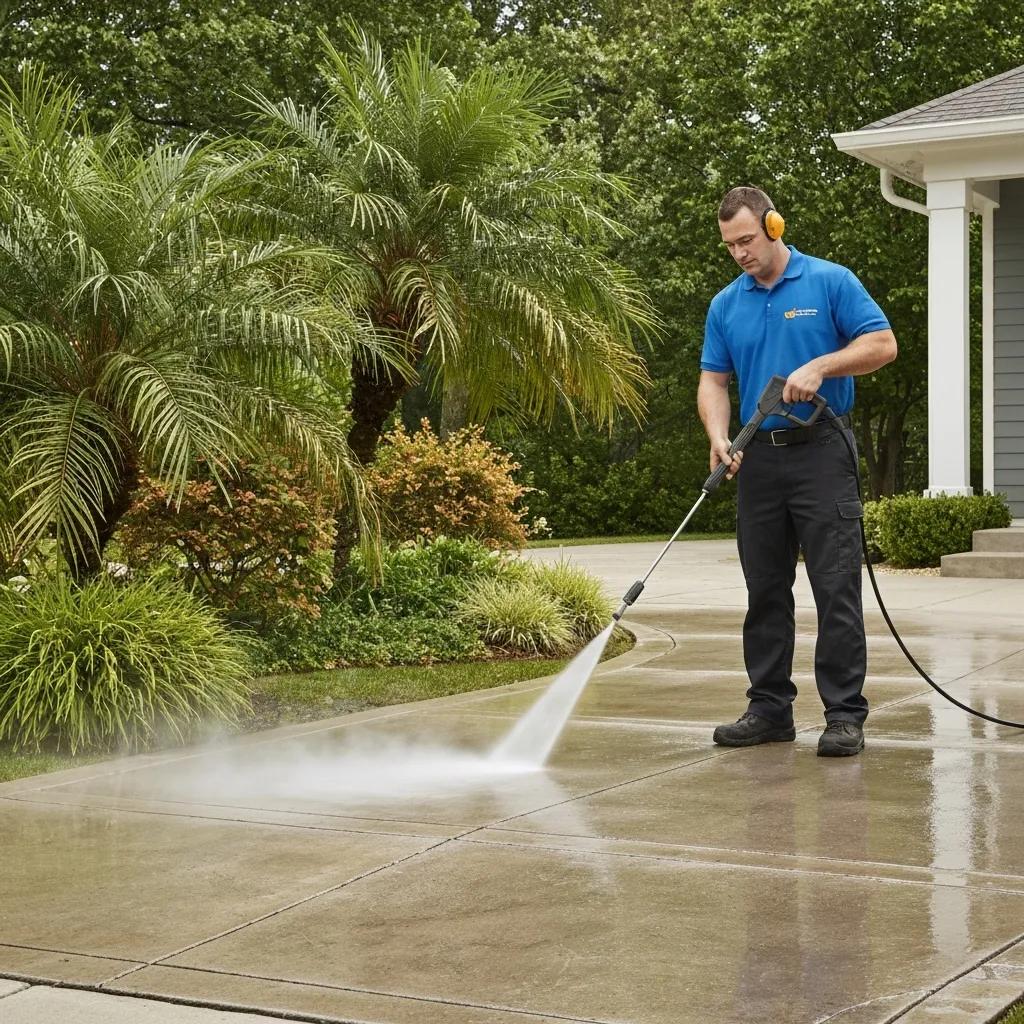
Driveway Cleaning That Works in Hayward — Expert Pressure Washing & Stain Removal
Driveway cleaning in Hayward means balancing strong results with careful protection of concrete, pavers, asphalt and nearby landscaping. This guide shows why the most effective approaches—pressure washing, soft washing, and targeted degreasers—are chosen for Hayward’s mild, coastal climate where algae and oil stains are common. You’ll find material-specific protocols, proven sequences for oil, rust and mold, plus practical DIY safety tips that lower the risk of surface damage. We also compare typical costs, explain what to expect from service packages, and point out when calling a pro is the smarter move to avoid etching or lost joint sand. Later, we outline Maid4You, Inc.’s local guarantees and eco-friendly practices so Hayward homeowners can decide between DIY upkeep and hiring trained technicians for big or stubborn jobs.
Which Driveway Cleaning Methods Work Best in Hayward?
Different cleaning methods work by different mechanisms and deliver different results. Pressure washing removes stuck-on grime with force; soft washing uses low pressure and chemistry to kill biological growth; and chemical degreasers dissolve petroleum-based stains for easy rinsing. Each method has a specific advantage—pressure washing quickly refreshes hard surfaces, soft washing helps prevent regrowth on porous or shaded areas, and degreasers target oil that scrubbing alone can’t lift. Knowing which method to use reduces damage risk and extends the life of your driveway. The list below summarizes the main options and when each is the right choice so you can match the approach to material and stain type.
- Pressure washing: High-pressure rinse for removing embedded dirt and light stains on strong, intact concrete.
- Soft washing: Low-pressure application of biodegradable cleaners and biocides to remove mold, mildew and algae on porous or shaded surfaces.
- Chemical degreasing: Enzymatic or solvent degreasers used to break down oil and petroleum stains before rinsing.
- Surface cleaner attachments: Rotary or surface-cleaner tools that give even results and cut down streaking on flat driveways.
Each option has trade-offs; understanding them helps you pick controlled, high-PSI action where safe, or a gentler chemical approach where needed. That choice also highlights the advantages of professional service, which we cover next.
How Professional Pressure Washing Improves Hayward Driveways
Professional pressure washing combines calibrated PSI, steady GPM and trained technique to remove deep grime without over-etching surfaces. Technicians select nozzle types, PSI ranges and surface-cleaner tools matched to the material and its condition—preventing common DIY mistakes like spalling or sand displacement. Pro rigs also usually deliver higher GPM for faster, cleaner rinsing and include pretreatments that loosen oil and biological films so results last longer. Trained crews manage runoff and protect landscaping, an important consideration for Hayward homeowners who care about nearby plants and soil.
A professional’s controlled use of pressure and chemistry lowers the risk of accidental damage while reaching deeper clean than most consumer units. When comparing services, ask about PSI ranges, surface-prep steps and recommended follow-up care to protect results and plan maintenance.
When to Choose Soft Washing Instead of Pressure Washing
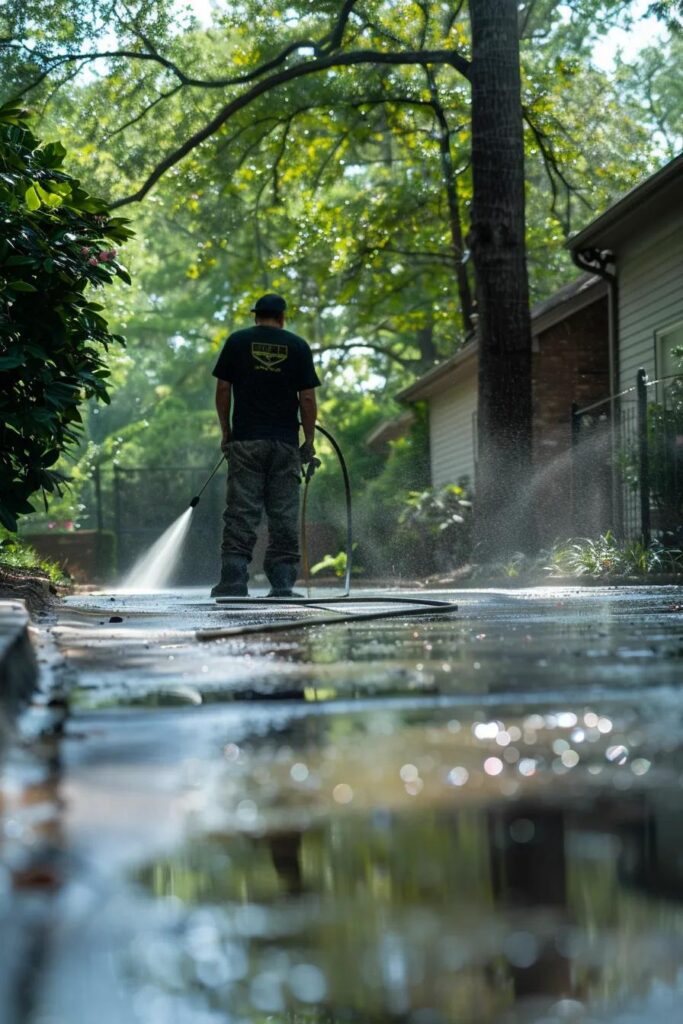
Soft washing is the go-to when biological growth—mildew, mold or algae—covers a surface, or when the driveway material is porous or finished with delicate coatings. The method uses low pressure and biodegradable antimicrobials that dwell on the surface to kill spores and root structures rather than blasting them into crevices. Soft washing protects polymeric sand and paver joints from being washed out and avoids etching sealed concrete or older asphalt—making it ideal for shaded driveways with recurring growth. It also reduces spray drift and lessens risk to shrubs and turf when technicians control dwell time and rinse carefully.
Choose soft washing if the surface shows widespread green or black staining, joint sand stability matters, or prior high-pressure cleaning caused damage. Spotting these indicators helps prevent unnecessary pressure that can create bigger maintenance issues later.
Cleaning Different Driveway Materials in Hayward
Driveway materials need tailored cleaning settings—PSI, nozzle choice and product type—to restore appearance without causing harm. Concrete tolerates higher pressures but can etch if overdone; pavers need gentler action to preserve joint sand and often require re-sanding; asphalt needs low-pressure cleaning and the right detergents to avoid surface degradation. Below we outline material-specific techniques and offer a quick comparison so homeowners and technicians can pick the correct method for each surface.
This comparison clarifies which pressure and chemistry combos work best for Hayward’s common driveway substrates and sets expectations for follow-up maintenance like sealing or re-sanding.
| Material | Common Issues | Recommended Method & PSI / Products |
|---|---|---|
| Concrete | Oil, tire marks, mildew, efflorescence | Degreaser pretreatment; pressure wash 2500–3500 PSI with a 25° nozzle for heavy stains; finish with neutral rinse and consider a breathable concrete sealer once fully dry. |
| Pavers | Joint sand erosion, moss, displaced polymeric sand | Soft wash for biological growth; surface cleaner at ≤1500 PSI to avoid sand loss; restore polymeric sand and seal for longer protection. |
| Asphalt | Grease stains, oxidation, cracking | Avoid >1500 PSI; use asphalt-safe detergents and low-pressure rinsing; repair cracks before sealing when necessary. |
Best Techniques for Concrete Driveway Cleaning in Hayward
Start concrete cleaning by identifying stains and preparing the area—sweep, protect nearby plants and isolate the work zone. For oil stains, apply a commercial degreaser and allow dwell time, agitating with a stiff brush before rinsing with equipment set between 2500 and 3500 PSI using a 25° to 15° nozzle for stubborn deposits. For general dirt and biological films, a surface cleaner attachment yields even results with less streaking. Mineral deposits may need an acidic treatment (followed by neutralization). After cleaning, let the concrete dry fully before applying a breathable sealer to reduce future staining and improve curb appeal.
Using correct technique lowers etching risk and ensures any sealer bonds properly. When unsure about PSI or chemical strength, test a small area and err on the side of gentler settings.
How to Maintain and Clean Paver Driveways
Paver driveways do best with a routine that preserves joint integrity and limits biological regrowth while keeping a uniform look. Begin with regular sweeping to remove grit, treat weeds and moss before cleaning, and use a low-pressure surface cleaner or soft wash to remove discoloration without washing out polymeric sand. After cleaning, replace and compact polymeric sand in the joints and allow proper cure time before use; sealing after thorough drying reduces staining and makes future maintenance easier. For high-traffic paver drives, annual checks for joint erosion, edge restraint condition and sand loss help plan repairs before issues worsen.
Consistent preventive care—sweeping, targeted spot treatments and periodic soft washing—cuts the need for aggressive interventions and keeps the surface stable and attractive.
How to Remove Common Driveway Stains in Hayward
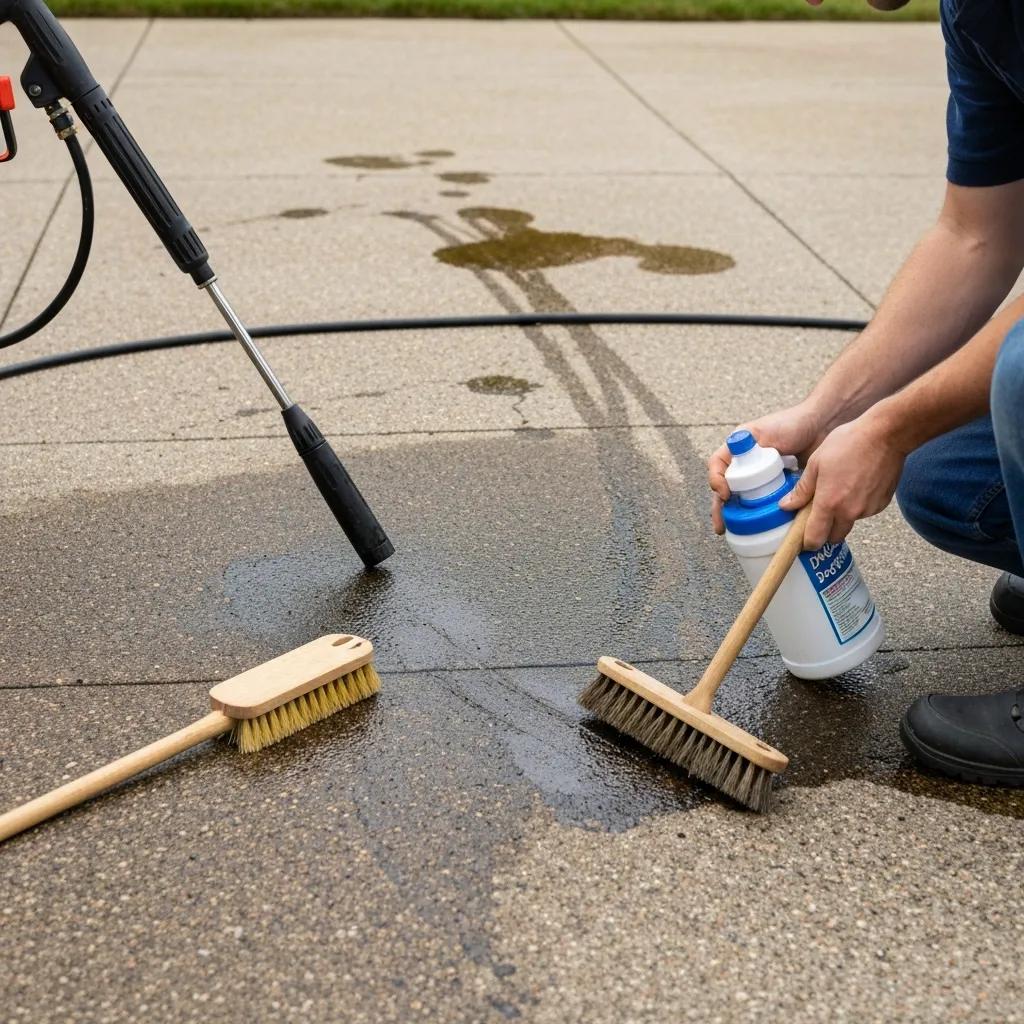
Effective stain removal matches the stain type to a step-by-step sequence that treats the cause without harming the substrate. Oil relies on emulsification and mechanical agitation, mold and algae respond to biocidal soft-wash solutions with dwell time, and rust often needs a chelating or acid-based treatment applied carefully after spot testing. Below we offer clear procedures for each stain type and a quick table so homeowners can decide whether a DIY attempt is reasonable or whether to call a pro.
| Stain Type | Cause / Substrate | Step-by-step Removal Method & Product |
|---|---|---|
| Oil / Grease | Motor oil, transmission fluid — concrete or asphalt | Absorb fresh spills with cat litter; apply an enzymatic or alkaline degreaser, brush, dwell 10–20 minutes, then pressure-rinse; repeat as needed and consider a poultice for older, set-in stains. |
| Mold / Algae | Biological growth in shaded, moist areas | Apply a biodegradable biocide or soft-wash solution at label concentration, allow 10–20 minute dwell, agitate where needed, then low-pressure rinse; treat shaded areas to reduce recurrence. |
| Rust | Metal oxidation on porous concrete | Test a small area first; use a chelating agent or rust remover per label, scrub lightly, rinse thoroughly; repeat cautiously to avoid discoloration. |
This quick-reference table helps prioritize actions and shows when professional-strength treatments or repeat applications may be required to fully remove a stain.
Best Ways to Remove Oil Stains from Hayward Driveways
For oil, act quickly: blot or absorb fresh spills, then apply a commercial degreaser formulated for concrete and allow enough dwell time for emulsification. Agitate with a stiff brush or mechanical scrubber, then rinse with pressure washing set to remove the softened oil without excessive etching—combining chemistry with rinsing gives the best results. For older stains, a poultice or repeated degreaser cycles followed by cautious higher-PSI rinses (within safe concrete ranges) may be necessary. Sealing after successful removal helps prevent recurrence. For deep or widespread penetration, trained technicians with industrial emulsifiers and runoff controls can save time and protect the surface.
Prompt action and the right product choice deliver the best outcomes; document your steps and consult professionals for persistent or hazardous spills.
How to Remove Mold, Mildew and Algae from Driveways in Hayward
Soft wash protocols are very effective for mold, mildew and algae: apply an EPA-compliant or biodegradable biocide at label concentration, allow enough dwell time to kill root structures, then rinse gently to remove residue. Use concentrations and dwell times that balance effectiveness with plant safety, and protect nearby landscaping with tarps or low-volume rinses to avoid chemical harm. Fix environmental contributors—poor drainage, excessive shade and organic debris—to reduce regrowth; pruning to increase sunlight and correcting runoff reduce conditions that favor growth. Regular, mild maintenance treatments extend the time between professional cleanings.
Combined treatment and environmental fixes lower recurrence and help maintain good neighbor relations across Hayward’s varied microclimates.
Driveway Pressure Washing Costs in Hayward, CA
Costs vary with measurable factors like square footage, surface condition, stain types and access challenges; add-on services such as degreasing, sealing or sand restoration raise the project scope and price. Estimators typically add base labor and equipment time plus materials for detergents or sealants; heavier staining requires longer dwell times or repeat work. The table below outlines common package tiers and estimated price ranges so homeowners can budget and compare proposals—these ranges are illustrative and should be confirmed with a site-specific estimate or free quote.
| Package | Includes | Estimated Price Range (per project) |
|---|---|---|
| Basic Clean | Surface wash, general rinsing | $150–$400 |
| Deep Clean | Degreaser for oil, pressure wash, spot treatments | $300–$800 |
| Restore & Protect | Deep clean + joint/polymeric sand work or sealing (optional) | $500–$1,500 |
Common pricing drivers include square footage, stain severity and type, site accessibility, and requested add-ons (sealant, polymeric sand replacement, specialized chemical treatments). For example, a 500 sq ft concrete apron with light biological growth will cost far less than a 1,200 sq ft driveway that needs degreaser pretreatment and sealing; steep slopes and limited access also raise labor time and price. Ask for line-item estimates that separate surface cleaning, stain pretreatment and sealing so you can compare proposals accurately.
How Driveway Cleaning Prices Are Determined in Hayward
Providers set prices based on square footage and stain severity as primary factors, then adjust for access difficulty, slope and the need for extra products or manual labor like poultices and hand-scrubbing. Time on site, travel, disposal of contaminated water (when required) and specialized equipment (high-GPM units or surface cleaners) also affect estimates. Extra services—polymeric sand replacement for pavers, crack sealing or application of breathable sealants—are usually itemized because they involve different materials and cure times. Comparing itemized quotes helps you evaluate value rather than choosing solely on price, especially when long-term protections like sealing reduce future cleaning needs.
Clear communication about expected outcomes, warranties or guarantees and any post-service drying or usage restrictions prevents misunderstandings and aligns expectations before work begins.
What Maid4You Offers in Hayward Driveway Cleaning Packages
Maid4You, Inc. provides driveway cleaning with an emphasis on eco-friendly products, trained technicians and a 100% satisfaction guarantee to give homeowners confidence in both process and results. Typical packages include surface cleaning, targeted stain pretreatment, thorough rinsing and optional add-ons such as sealing or joint repair depending on the substrate; technicians follow methods that protect landscaping and manage runoff. Our local Hayward/Bay Area experience helps us address regional issues like shaded algae and frequent oil spotting. For a free, no-obligation estimate or to discuss package details, contact Maid4You to schedule an assessment.
We frame service around transparency and environmental care so customers can choose add-ons that match their budget and desired longevity of results.
Why Choose Maid4You for Driveway Cleaning in Hayward?
Maid4You, Inc. stands out with homeowner-focused trust signals: a 100% satisfaction guarantee, eco-friendly products, a trained and experienced team, local Hayward/Bay Area knowledge and easy, cash-free payment options. These elements reduce homeowner risk—guarantees back results, eco-friendly chemistries limit landscaping impact and trained technicians match equipment and chemicals to substrate needs to avoid damage. Local experience helps us recognize regional patterns like persistent algae in shaded microclimates and informs practical prevention advice after cleaning. Together, these factors make hiring us a confident choice for residents who value environmental care and dependable outcomes.
How Maid4You Ensures Eco-Friendly, Safe Driveway Cleaning
Maid4You prioritizes biodegradable, family-safe cleaners and thorough technician training to manage runoff and protect nearby plants—matching homeowner preferences for responsible service. Our staff apply chemicals at labeled concentrations and use low-pressure soft wash methods when surfaces or vegetation are at risk, reducing chemical loading and mechanical damage. This approach supports Hayward homeowners who want plant safety and regulatory compliance while still removing biological growth and surface contaminants effectively. By pairing product selection with careful application, Maid4You balances efficacy with ecological care.
These practices ease homeowner concerns about chemical exposure and make environmental stewardship a clear advantage when comparing providers.
What Makes Maid4You’s Team the Right Choice for Hayward Driveways
Maid4You highlights a trained team with local Hayward experience and customer-service practices designed for smooth communication and easy, cash-free payments. Technicians are trained to match PSI, nozzle selection and chemical concentration to each material and condition, reducing damage risk and improving cleaning longevity. Our satisfaction guarantee and local reputation give homeowners confidence that any issues will be handled promptly. Clear communication, consistent technique and remedial assurances help homeowners move from uncertainty about service quality to confident scheduling and follow-through.
For Hayward residents, a locally focused team familiar with regional materials and climate patterns offers practical advantages over generalized or non-local providers.
DIY Driveway Cleaning Tips for Hayward Homeowners
DIY cleaning is useful for routine upkeep when homeowners use the right equipment, follow safe pressure and chemical guidelines, and protect plants and surfaces. Prioritize safety—wear PPE, shield plants with rinse water or tarps and use consumer-grade pressure washers within recommended PSI ranges for each material. Regular tasks like sweeping, quick oil blotting and periodic low-pressure rinses lengthen the time between professional cleanings and reduce the need for intensive treatments. The checklist below lists recommended equipment and safety steps for homeowners tackling DIY work.
- Consumer pressure washer with adjustable PSI: Pick a unit that lets you set safe pressure levels for the surface you’re cleaning.
- Eco-friendly degreaser and biodegradable biocide: Use label-approved cleaners made for concrete, pavers or asphalt to avoid plant harm.
- Surface cleaner attachment and stiff brushes: A surface cleaner gives even coverage; stiff brushes help with localized oil spots.
Which Equipment and Products Are Safe for DIY Driveway Cleaning?
Safe DIY gear includes consumer pressure washers with variable PSI and surface-cleaner attachments that spread flow evenly to reduce scarring. For products, choose labeled eco-friendly degreasers and biodegradable biocides formulated for exterior surfaces; avoid industrial solvents or acids unless you have experience and the right protective gear. Stick to recommended consumer PSI ranges—often under 3000 PSI for concrete and below 1500 PSI for asphalt and pavers—and always test a small area first. Protect yourself and landscaping by wearing eye protection, gloves and by pre-wetting plants or using barriers to limit chemical contact.
Following these precautions reduces the risk of permanent surface damage and environmental harm, so DIY efforts complement rather than replace professional maintenance when needed.
How to Safely Remove Stains and Maintain Your Driveway Between Professional Cleans
Spot-treat stains promptly: absorb fresh oil, apply a degreaser, agitate and rinse; for biological growth, apply a soft-wash biocide and allow dwell time before rinsing gently. Keep a seasonal routine of sweeping, clearing debris from joints and checking for early staining or sand loss in pavers—addressing small problems early prevents major restoration. Re-seal concrete or pavers on the manufacturer’s schedule to reduce permeability and staining, and monitor shaded or poorly drained spots for recurring growth that may need professional attention. Book professional deep cleans for large areas, persistent stains or safety concerns (slippery algae, deeply set oil) that exceed DIY capabilities.
Maid4You, Inc. can step in for tough stains, extensive coverage or when time is limited. With eco-friendly products, trained technicians and a 100% satisfaction guarantee, we offer local expertise for big jobs and persistent problems, plus free, no-obligation estimates to help you compare options. For quick questions or to schedule an assessment, call your local Maid4You office to discuss a plan that protects landscaping and restores driveway appearance.
Frequently Asked Questions
What are the environmental impacts of driveway cleaning methods?
Different cleaning methods have different environmental footprints, especially around chemical runoff and water use. Eco-friendly choices—biodegradable cleaners and low-pressure soft washing—minimize harm to vegetation and local ecosystems. Ask providers about how they protect plants and manage runoff, and look for high-efficiency equipment that conserves water while still delivering an effective clean.
How often should I schedule professional driveway cleaning?
Frequency depends on material, local climate and traffic. As a rule of thumb, plan on at least one professional cleaning a year to maintain appearance and prevent buildup. Shaded driveways or those with frequent oil stains may need more frequent attention. Regular inspections help you find the right schedule for your situation and keep the driveway in good shape.
Can I use regular household cleaners for driveway stains?
Some household cleaners work on minor spots, but they often lack the strength for oil, rust or heavy biological growth and can harm materials or the environment. It’s better to use cleaners made for driveway surfaces—eco-friendly degreasers or biocides—and to consult a professional for serious or persistent stains.
What safety precautions should I take when cleaning my driveway?
Safety matters. Wear gloves, eye protection and suitable footwear. If using a pressure washer, know how to operate it and set PSI for the surface. Shield nearby plants with tarps or plastic sheeting to avoid chemical damage, and follow all manufacturer instructions for any cleaners you use.
What should I do if my driveway has persistent stains?
If stains won’t come out with standard methods, call a professional. Pros can diagnose the stain and use targeted treatments—specialized degreasers, poultices or industrial equipment—that remove deep-set marks without damaging the surface. Timely maintenance helps prevent stains from becoming permanent, so act early.
Are there any DIY methods for maintaining my driveway between professional cleanings?
Yes—regular sweeping prevents organic buildup, blot fresh oil spills promptly and use a suitable degreaser for minor spots. A soft wash can keep mold and algae under control, and replacing joint sand in pavers as needed preserves stability. These proactive steps extend intervals between professional cleanings and keep your driveway looking better longer.
Conclusion
Effective driveway cleaning in Hayward combines the right technique with eco-conscious practices to boost curb appeal and extend surface life. Understanding the needs of different materials and stains helps you protect your investment. If you prefer professional help, Maid4You offers expert, locally focused service backed by a satisfaction guarantee and eco-friendly methods. Contact us today to see how we can restore and protect your driveway’s appearance.